Table of Contents
If you need expert aid enhancing your family members bonds, the certified marital relationship and family specialists (LMFTs) at Thriveworks are below for you for all of you. You can review much more regarding how the process functions in the sections below.
Family therapists do not simply observe problems; they likewise help in locating services. Some of the rewards of family therapy are one-of-a-kind to certain circumstances, and others are a lot more basic.
Communication Patterns That Shape Outcomes
Meaningful, safe relationships have a tendency to improve an individual's overall wellness. And discovering how to enjoy and be loved is a lesson you can carry with you throughout your life. While goals may vary from one family members to the following, there are three major objectives of family members therapy: To educate. A family therapist can answer concerns like the following: What is a psychological wellness issue? How might it be influencing other member of the family? What are normal methods someone might respond to injury? What is safe attachment and how can it be attained? What are healthy and balanced boundaries? What is active listening? To advice.
To reinforce. A family therapist helps clients develop much deeper bonds, much better communication skills, inner durability, and dealing approaches that they require to manage household stressors. Once more, people look for family members therapy for a large range of reasons. As a matter of fact, a Thriveworks family therapist typically starts therapy by asking what everyone's objectives are.
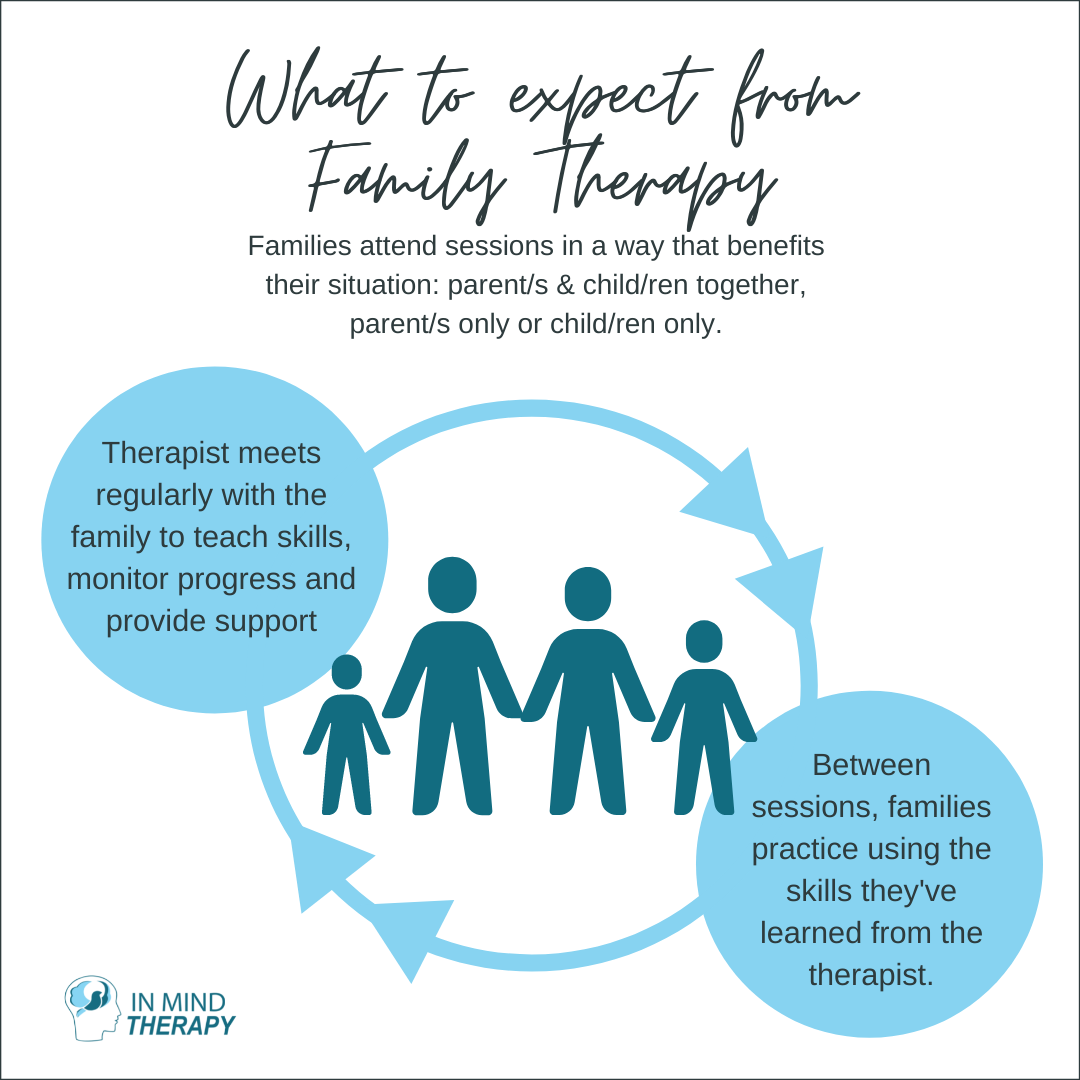
Life shifts: Major life adjustments, such as divorce, remarriage, or the birth of a brand-new child, can be challenging for family members to navigate. Family members therapy can help take care of these changes properly. Below are the five phases of family members therapy: 1. Involvement: The initial stage involves building connection and establishing a working connection in between the household and the therapist.
Preliminary analyses are carried out throughout this stage to collect information concerning the household's background, structure, and certain issues. 2. Analysis: In this stage, the specialist gathers much more in-depth information regarding the family members's dynamics, connections, and patterns of communication. The objective is to identify the origin of the family's difficulties and gain insight into just how private relative communicate with each other.
Understanding Relational Dynamics in Your Partnership
5. Termination and follow-up: As progress is made and healing goals are fulfilled, the household therapy procedure enters the discontinuation stage. The specialist functions with the household to consolidate the gains made during treatment and establish a prepare for the future. This might entail discussing means to keep favorable modifications, stop regression right into old patterns, and supply resources for ongoing support if needed.
It is essential to note that the stages of family members therapy are not always direct, and the specialist may need to revisit or adjust certain phases based upon the family members's progress and developing requirements throughout the restorative procedure. Furthermore, the success of family members treatment commonly depends upon the willingness of member of the family to actively take part and engage in the therapeutic trip.
It is a highly prominent method that focuses on understanding and resolving the family's overall structure and company. The core principles of structural family therapy include: Family structure: This describes the invisible patterns, policies, and connections that identify exactly how household participants communicate with each other. The therapist identifies inefficient patterns and looks for to create much healthier, extra practical frameworks.
Building A Secure Environment With Your Therapist
Pecking order: Each family has a power structure that establishes power, authority, and decision-making. Unions: In some cases, family members form unions or partnerships versus others within the family.
Restructuring: The objective of treatment is to facilitate favorable modifications in the household's framework and interactions. This may involve altering duties, borders, or communication patterns. It is necessary to note that the field of treatment is constantly evolving, and various healing techniques acquire prominence in time. The finest therapy for family members is receptive to a family's requirements.
It takes place in a native environment where experienced specialists frequently integrate a variety of therapy strategies. There's no solitary treatment that can be applied in the same means for each family, resulting in the same outcome every time. Family members therapy has to do with facility partnerships, not solutions. A family members counselor typically pulls from a variety of restorative methods to customize a therapy strategy.
This step is necessary for producing a secure and trusting environment where family members can share their worries honestly. Evaluation: Throughout this action, the specialist gathers information to understand the family members's structure, limits, pecking orders, and interaction patterns. The evaluation stage intends to identify problematic patterns and habits that add to the household's concerns.
How Inclusive Approaches Creates Safer Spaces
Restructuring: Once the specialist has actually evaluated the family members's dynamics and identified problematic patterns, the restructuring phase starts. This action entails interventions targeted at modifying the family's structure and interactions. The specialist may recommend modifications in boundaries, pecking orders, and communication styles to advertise much healthier relationships. The objective is to assist member of the family adjust to new patterns that motivate better communication, analytical, and dispute resolution.
It involves strengthening positive behaviors, urging continued development, and giving support as required. The therapist likewise assists the family construct durability and deal with obstacles that might arise as they adapt to the new patterns of interaction. In family medicine, the idea of the family members life cycle refers to the various phases a family normally undergoes gradually.
They might seek higher education, begin their occupations, and discover their identifications outside the household system. Coupling/Marriage: This stage entails the development of a dedicated partnership, such as marriage or long-term cohabitation. Couples might focus on constructing their relationship, developing common worths, and preparing for their future together. Parenting/Family with Young Kids: In this phase, couples come to be moms and dads and raise young kids.
Household with Adolescents: As kids grow into teens, the household encounters new difficulties connected to parenting teens. Parents need to adapt to the altering demands of their kids and support them through the process of establishing freedom and freedom.
CPT: Evidence-Based Options for PTSD
Grown-up kids might take on caregiving roles for their elderly parents, and the family might need to resolve problems associated to aging and end-of-life preparation. We all desire happy family members.

Occasionally it takes tough job, thoughtful interaction, and a capability to see issues from different perspectives. These aren't abilities that everybody simply creates normally. Often you have to make the deliberate decision to do betterand that's where household therapy at Thriveworks can make a huge distinction.
Family Counseling: Addressing Systems, Not Just Symptoms
By stressing the vital role of family members characteristics in emotional health, specialists work to foster an encouraging atmosphere conducive to healing. One of the substantial results of household therapy is enhanced interaction.

Navigation
Latest Posts
Loss Processing and Psychoanalytic Work for Healing
Contemporary Psychodynamic Therapy in Chicago
LGBTQ+ Athletes and Discrimination Impact